Why Headless E-Commerce Checkouts Fail Silently

UptimeClick Architecture Team
5 min read
The Illusion of the 200 OK Decoupled Frontend
Headless and composable commerce architectures give engineering teams full control over customer experience. Frameworks like Next.js, Remix, and Hydrogen deliver sub-second page loads and custom component systems.
However, decoupling the frontend presentation layer from backend commerce engines introduces a silent failure mode that traditional monitoring cannot detect.
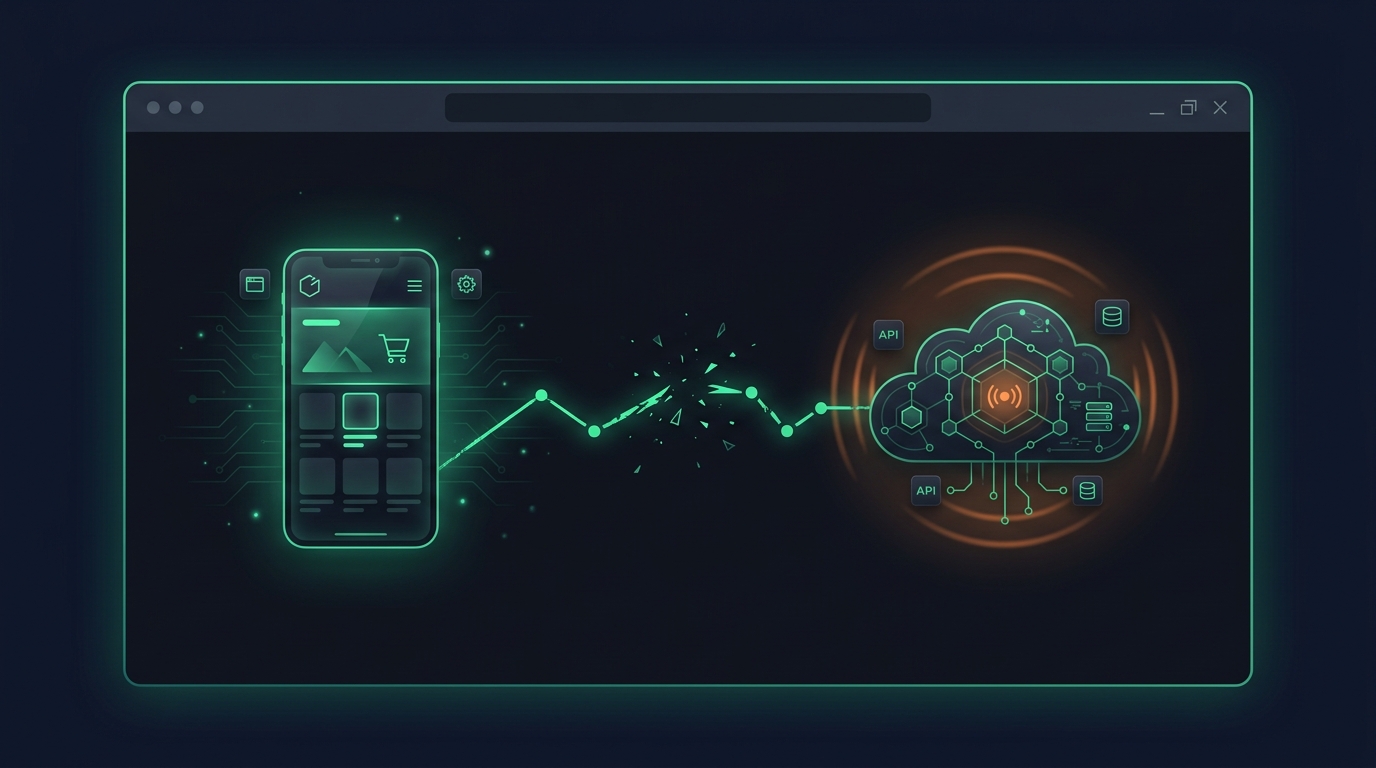
When a monolithic Shopify or WooCommerce store goes down, the entire site throws a 502 or 503 gateway error. Traditional server monitors catch this immediately. In contrast, when a headless store experiences a checkout API failure, the frontend application remains perfectly healthy. Vercel or Cloudflare serves static pages with HTTP 200 OK status codes, while the asynchronous bridge connecting the buy button to the commerce checkout is completely broken.
The Critical Handshake: How Headless Checkouts Function
In a headless implementation, the storefront does not host its own payment gateway. Instead, it maintains a lightweight cart state and hands the customer off to a hosted checkout domain:
- The user clicks “Add to Cart” on the headless product page.
- The frontend dispatches a GraphQL mutation (e.g.,
cartCreateorcartLinesAdd) to the Storefront API. - The API returns a persistent
cartIdand a securecheckoutUrl. - When the user clicks “Proceed to Checkout,” the browser executes a redirect (e.g., to
checkout.yourbrand.com) with attached line items, customer access tokens, and discount parameters.
If any step in this asynchronous chain fails, the customer clicks the checkout button and nothing happens. No page refresh occurs, no redirect triggers, and the user bounces without completing their purchase.
The 5 Most Common Headless Checkout Failure Vectors
1. Expired or Revoked Storefront Access Tokens
Storefront API keys are configured as environment variables in the frontend hosting deployment. During routine security audits, team member offboarding, or multi-environment deployments, API credentials can be rotated in the backend without updating production environment variables.
The frontend continues to render static product pages from CDN cache, but any dynamic cart mutation instantly returns an HTTP 401 Unauthorized response in the background.
2. GraphQL Cart Mutation Schema Drift
Backend commerce platforms update their GraphQL schemas on scheduled quarterly releases. When an API version is deprecated, field definitions (such as line item attribute structures or selling plan IDs for subscriptions) may change.
If the headless client passes an argument structure no longer accepted by the new API version, the mutation fails with unhandled schema validation errors. The frontend catch block rarely displays an actionable error to the customer, leaving the purchase button in an endless loading state.
3. CORS and Domain Cookie Desynchronization
Headless stores operate across multiple domains: the marketing storefront on brand.com and the checkout on checkout.brand.com.
Browsers enforce strict cross-origin resource sharing (CORS) and third-party cookie restrictions. If a reverse proxy or CDN header configuration accidentally strips the Access-Control-Allow-Origin header during an edge worker update, cross-origin fetch requests will be blocked at the browser level.
4. Storefront API Rate Limiting During Traffic Surges
Unlike server-rendered stores where cart operations run internally, headless stores generate an API request for every cart modification. During promotional campaigns or Black Friday flash sales, hundreds of concurrent shoppers trigger cart mutations simultaneously.
If your headless implementation makes direct client-side requests without an edge caching proxy, your store can hit platform API rate limits. The commerce engine returns HTTP 429 Too Many Requests, blocking checkouts precisely when traffic is highest.
5. Line Item Inventory Invalidation at Redirect
When a headless frontend redirects a shopper to the hosted checkout domain, the commerce engine revalidates inventory levels. If an item went out of stock during browsing and the frontend failed to catch the out-of-stock mutation error, the checkout redirect fails or throws an unhandled session exception.
Why Ping Monitors and APMs Miss Headless Breakages
Application Performance Monitoring (APM) tools monitor server CPU, memory, and backend response codes. Synthetic ping monitors check the home page URL every 60 seconds.
Both tools report 100% green uptime during a headless checkout collapse. Your edge network is serving static HTML quickly, server load is low, and all monitored URLs return HTTP 200. The breakdown occurs strictly inside the visitor's browser during client-side JavaScript execution and cross-domain handoff.
How Synthetic Browser Testing Secures Headless Commerce
To protect revenue on headless platforms, stores need continuous end-to-end verification that behaves like an authentic customer.
Tools like UptimeClick launch real desktop Chromium browsers at scheduled intervals:
- The browser navigates to your live headless storefront and executes all client-side JavaScript.
- It locates the Add to Cart and Checkout action elements in the rendered DOM.
- It validates physical clickability, ensuring buttons are not frozen by failed GraphQL promises or blocked by modal overlays.
- If a button fails actionability checks, it captures a full-page screenshot and sends an alert with visual evidence.
This ensures your engineering team catches API token expirations, GraphQL drift, and CORS regressions within minutes of occurrence, before ad spend is wasted on non-converting traffic.